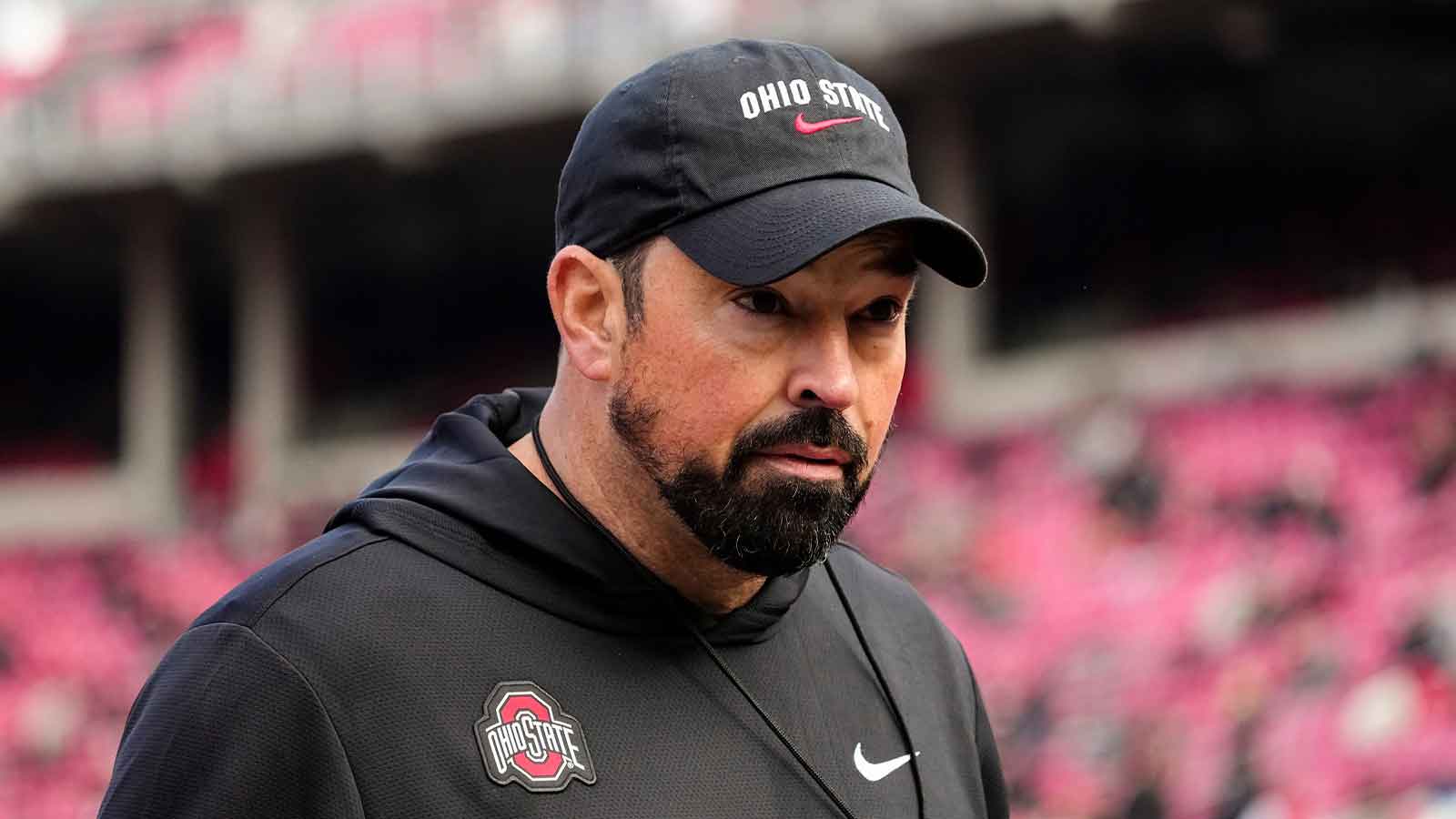
Ohio State head coach Ryan Day believes college football needs more structure in its player compensation system and wants a higher salary cap as revenue sharing continues to influence the sport.
The House settlement introduced direct athlete revenue sharing, allowing schools to distribute up to $20.5 million to players. That amount increased to $21.3 million this month, but programs can still provide additional compensation through third-party NIL opportunities, creating what Day described as a “soft cap” system.
Speaking at Big Ten Media Days at the Hilton Chicago Wednesday, Day said he supports having clearer rules for spending above the cap while also arguing that the current limit should be raised:
“I think we all would like to see more structure when it comes to the salary cap and then how things are handled above the salary cap. Call it a ‘soft cap.’ I think if you’re talking about that, yeah. Do I think the cap should be higher? Absolutely.
“What does that mean in terms of parity and all that? I don’t know. But I can tell you right now, we want to pay our players and we certainly would like to see that cap go much higher.”
College football roster expenses have continued increasing since revenue sharing began. Multiple programs are expected to exceed $40 million in roster costs during the 2026 season, according to On3’s Pete Nakos.
Ohio State athletic director Ross Bjork previously revealed that players from the Buckeyes’ 2024 national championship team received “about $20 million,” placing the program among the highest-paying teams in the country. Since then, roster values have continued rising, with some estimates suggesting they could more than double within two seasons.
Day said increased spending is simply part of the current market and believes a higher cap could help programs compete more effectively while maintaining a structured system.
Ohio State head coach Ryan Day believes college football needs more structure in its player compensation system and wants a higher salary cap as revenue sharing continues to influence the sport. The House settlement introduced direct athlete revenue sharing, allowing schools to distribute up to $20. 5 million to players.