


How the ‘Merrily We Roll Along’ Cast and Director Turned Their Hit Broadway Musical Into a Cinematic Experience
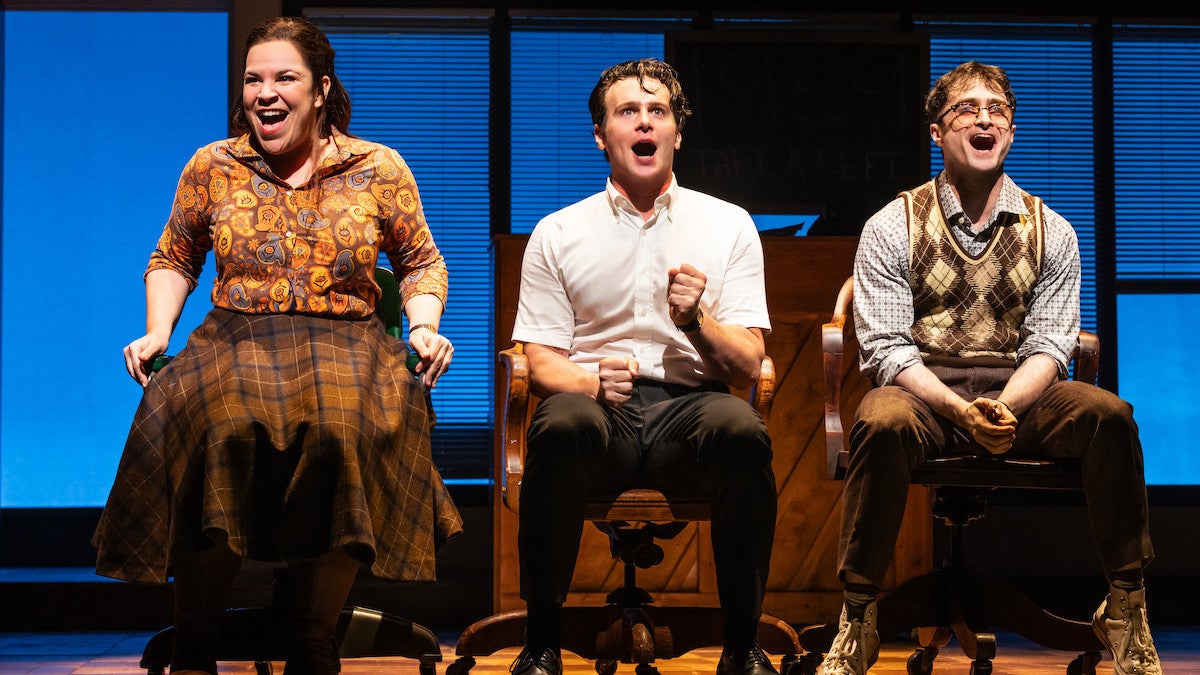
In hindsight, capturing a filmed version of last year’s Tony-winning production of “Merrily We Roll Along” may have seemed like an obvious step.
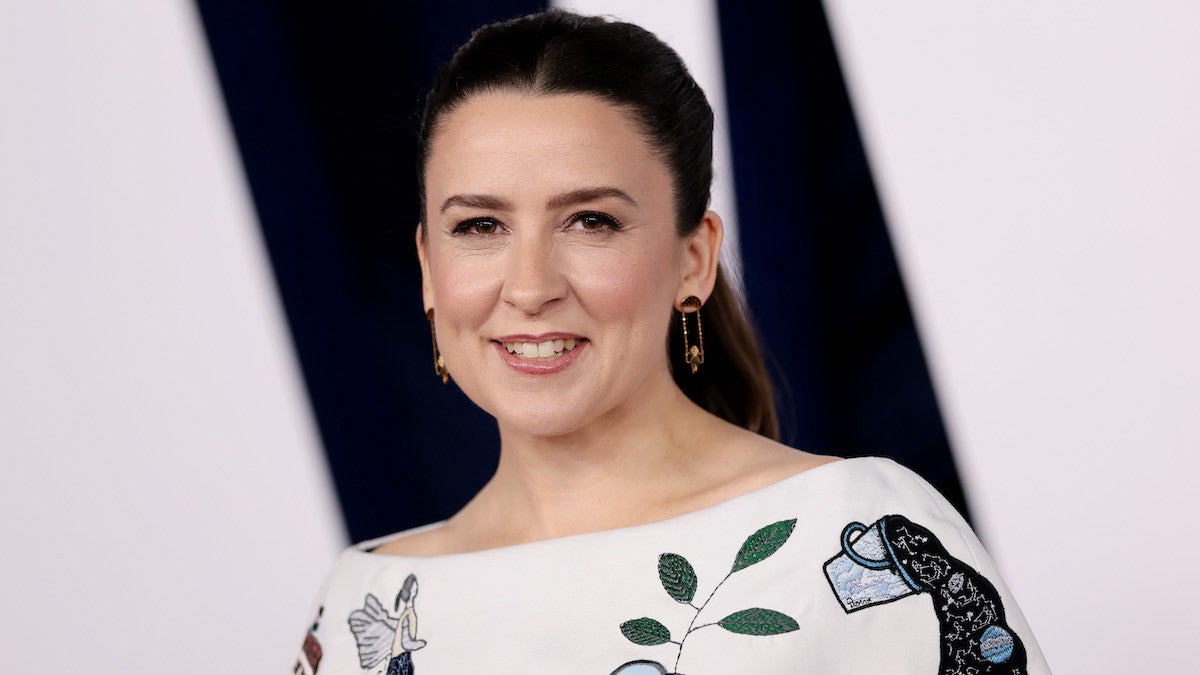
Director Maria Friedman’s take on the infamous Stephen Sondheim flop received rapturous acclaim during its Broadway run, which marked the first time “Merrily We Roll Along” had been shown on Broadway since the musical’s failed original 1981 production. To top it all off, Friedman’s production took home four awards at the 2024 Tonys, including Best Revival of a Musical, Best Actor in a Musical (Jonathan Groff) and Best Featured Actor in a Musical (Daniel Radcliffe).
Despite the production’s overwhelming success, it was not until the final month of its Broadway run last summer that Friedman decided to create a film version of it, which hit theaters in the United States this past Friday. “Everybody realized that we weren’t going to recast the show, and so, therefore, we wanted to bottle it,” Friedman told TheWrap. “The financing came together really easily because people love the production, love everyone in it and wanted to hold onto it. I hear that making films is bumpy. This was anything but.”

Star Lindsay Mendez said she is “elated” the film exists and that people can finally see it. “We have it forever as this beautiful time capsule of this show that we’re all really proud of,” the actress shared. “Not to mention it being this amazing redemption for what was, you know, this very famous flop for the incredible Stephen Sondheim. For it to have this second life in this way is beautiful.”
For Mendez’s co-stars, Radcliffe and Groff, it was difficult at first to wrap their heads around the idea. “The wonderful thing about theater is that it is this transient thing that disappears and ‘Merrily,’ in actual fact, was the accumulation of hundreds of shows that we did together,” Radcliffe explained. “It was this thing that changed every night, and now there will be one version, and that is both a blessing and a curse.”
Groff shared Radcliffe’s sentiment. However, the new, big-screen iteration of “Merrily We Roll Along” is not the first filmed version of a popular Broadway production Groff has taken part in. The actor also starred in the filmed performance of “Hamilton,” and when he began thinking more about this new version of “Merrily,” he recalled a conversation he had once with “Hamilton” cast mate Renée Elise Goldsberry.
“Renée was like, ‘Everyone thinks I’m Mimi in ‘Rent’ because I was Mimi in the captured performance of the show. This lives on,'” Groff remembered. “You know, I grew up watching ‘Sunday in the Park with George.’ I know who Bernadette Peters and Mandy Patinkin are because I saw them when I was 13 on a VHS tape, not because I saw their actual performances [in-person].”
“To get to be a part of one of those lucky few groups of actors that have their work captured is a dream come true,” he concluded. “It’s just something that rarely happens in theater, so it’s a real blessing.” When I told the trio it was a delight to actually get to see the show, having missed my chance to catch it on Broadway last year, Radcliffe replied, “And it is wonderful for exactly that reason. This exists for people who didn’t get to see the show, people who couldn’t make it to New York, or for people who did see the show and loved it and want to relive it again.”

When Friedman set out to actually capture “Merrily We Roll Along,” she knew she did not want it to just be a simple pro-shot of the production full of stationary wide angles. “I wanted to make sure you got a cinematic experience,” the director explained. “I didn’t just want it to feel like the audience watching the show. I wanted to go in, into the psychology of it, the subtext. To use a football analogy, I wanted to capture the off-the-ball moments.”
By that, Friedman means the nuances, the subtle, spontaneous reactive and voyeuristic moments that give a Broadway show new life night after night. To ensure she captured that, Friedman worked with a team of “incredible” camera operators to film the production from multiple angles.
“Everybody watched the show a couple of times, so they knew exactly what I wanted from it,” Friedman said. As for her specific instructions, Friedman told her crew, “When you’ve missed a shot, just find me something beautiful, because everybody on that stage is full of life. You’re going to get something wherever you point that camera. You’re never going to get a shot that I can’t use.”
The editing process was complicated by overhead lighting issues that forced Friedman and her team to work over single profile shots multiple times, as well as audio problems caused by the open-mic nature of Broadway, which resulted in every actor’s audio file having audience noise in the background. “We had this unmanageable beast that we had to tame,” Friedman wryly observed. The solution was not to simply silence the background sounds, either.
“We tried an edit without the audience but, of course, the audience dictates how the actors say their lines because sometimes people laugh or they gasp,” Friedman explained. “So the audience had to be in it, which is fine, but then I had to choose when to put them in, how present they were and when they were going to help lead the viewers in the cinema. I think we did a great job having them there but not there at the same time.”
The film was a time-consuming labor of love for Friedman. (“When people ask, ‘What were you doing?’ I can tell you that every single frame has been looked at and dealt with,” she noted.) While the process of shooting and editing the film required intense work and discipline on her part, though, Radcliffe, Groff and Mendez found making it to be a largely unintrusive process. In fact, it presented the actors with a rare opportunity.
“We didn’t have cameras on stage during performances. They would film the show at night from various wide angles, and then during the day, they would go in for close-ups,” Radcliffe recalled. “So actually, it gave us a really cool chance that you very rarely get as an actor, which is give your performance at night and then during the day really hone in on some stuff and be able to play things differently than you normally would because the potential to be so much smaller is there.”
A year and a half later, Friedman’s carefully constructed film has finally arrived. Reflecting on it all, the director says she is ultimately proudest of the impact the production has had on how people view “Merrily We Roll Along,” the musical that for years was thought of as Sondheim’s greatest flop. Friedman believed it deserved to be remembered differently, and now it is.
“Steve wrote a masterpiece,” the director said. “This is going to go out to all the corners of the world where people who couldn’t see it on Broadway are going to get to see a really, really good version that belongs in a cinema. It won’t make you feel like you missed out by not having been at the theater. It stands all on its own.”
For Radcliffe, Mendez and Groff, when they think back to “Merrily” now, the thing that has stayed with them is, well, each other.
“I feel like I learned so much about friendship doing the show,” Groff revealed. “It’s something Linsday said earlier. There’s a sort of breathability here that real, deep friendships have. We’ve seen each other often since the show ended, but not like we did. Not every day. But we get to watch each other grow and change through time now, and that experience bonded us and our whole company for life, and I feel it every time we see each other.”
Now, moviegoers have the chance to feel it, too.
“Merrily We Roll Along” is now playing in theaters.
The post How the ‘Merrily We Roll Along’ Cast and Director Turned Their Hit Broadway Musical Into a Cinematic Experience appeared first on TheWrap.
What's Your Reaction?
 Like
0
Like
0
 Dislike
0
Dislike
0
 Love
0
Love
0
 Funny
0
Funny
0
 Angry
0
Angry
0
 Sad
0
Sad
0
 Wow
0
Wow
0