

:quality(85):upscale()/2025/12/19/857/n/49352476/7e1dd97c6945a8e23b6c27.03572663_.png)







Every Sequel Ever Nominated for Best Picture
The Academy Awards aren’t just awards, they’re a lodestone in the film industry. Every year, for at least five months, the whole business revolves around the Oscars. Which films will be nominated, which films will win, and sometimes which films get made altogether, based on the notoriety of the winners and the studios that yearn, year after year, to acquire more of those coveted gold statues.
But we all know that some types of films rarely, if ever, win Oscars. And while some of the more populist genres, like action movies and superhero flicks, sometimes make a big showing in the technical awards, making into the Best Picture race is even harder.
One category of films makes it into the Best Picture race so rarely that they can all fit into a handy-dandy article like this one: Sequels. Follow-ups to hit and/or award-winning films rarely get as much glory as the originals, and when they do find their way into the Best Picture category, they almost never win. Still, the history of sequels nominated for Best Picture goes back further than most people realize, so let’s take a look back at all the classic (and not-so-classic) feature film follow-ups that made the grade!
‘The Broadway Melody of 1936’ (1935)

Harry Beaumont’s “The Broadway Melody” was the first talkie to win Best Picture, the first musical to win Best Picture, and the first Best Picture winner whose sequel was also nominated for Best Picture. The original film is, by today’s standards, a flimsy melodrama but “The Broadway Melody of 1936” is a corker. Eleanor Powell stars as an ingenue trying to make it big in musicals, but she can’t get hired until she impersonates a fictional celebrity. Jack Benny co-stars, doing a memorable riff on real-life gossip hound Walter Winchell, and future “Beverly Hillbillies” stat Buddy Ebsen shows up to prove that, on top of his comic chops, he was one heck of a dancer. It lost Best Picture to the all-star naval drama “Mutiny on the Bounty.”
‘The Bells of St. Mary’s’ (1945)

The feel-good classic “Going My Way” swept the Oscars in 1944, snatching the Best Picture prize from the classic thriller “Gaslight.” One year later, the sequel snatched up “Gaslight’s” Oscar-winning star, Ingrid Bergman. Bing Crosby returns as Father O’Malley, who once again gets assigned to a failing church and once again fixes everyone’s problems. Bergman plays his foil, a nun with her own ideas about how the church should be run, but eventually comes around and even teaches a bullied boy how to box, in a scene that ranks among Bergman’s very best. The film was a hit, and it’s still a beloved Christmas classic, but it lost Best Picture to Billy Wilder’s “The Lost Weekend” (a film which, for obvious reasons, had no sequel).
‘The Godfather Part II’ (1974)

Francis Ford Coppola pulled out all the stops for the sequel to his Best Picture-winner. “The Godfather Part II” follows newly crowned mafia kingpin Michael Corleone (Al Pacino) as he tries to expand his business to Cuba and deals with a shocking betrayal. But it’s also a prequel, telling the story about Vito Corleone — played by Marlon Brando in the original, and Robert De Niro in the follow-up — as he rose to power in the first place. Ambitious, exciting, and heck, even the title was bold: Before “The Godfather Part II,” sequels didn’t usually have numbers tacked onto them, but after the film’s success (including its own Best Picture win) it became the industry standard.
‘The Godfather Part III’ (1990)

It took 16 years for Francis Ford Coppola to conclude the “Godfather” trilogy, and although the third film was nominated for seven Oscars, the Best Picture nomination feels like a consolation prize. The original cut of “The Godfather Part III” is an unconvincing follow-up, with Michael Corleone trying to go legit while Andy Garcia, the illegitimate heir to the empire, starts an incestuous relationship with his cousin, Michael’s daughter, played by a not-very-good Sofia Coppola (who did, of course, become a great director in her own right). Coppola has released two director’s cuts of “Part III” in the years that followed, but the original is a slog. It lost to Kevin Costner’s “Dances with Wolves,” as did Martin Scorsese’s “Goodfellas.” 1990 wasn’t a good year to be a wise guy.
‘The Silence of the Lambs’ (1991)

Is “The Silence of the Lambs” a sequel? Maybe, maybe not, but we might as well mention it since someone’s going to complain either way. The character of Hannibal Lector was first introduced in Thomas Harris’s novel “Red Dragon,” which was originally adapted into Michael Mann’s serial killer classic “Manhunter” in 1986. “The Silence of the Lambs” was Harris’s sequel novel, and although Hannibal the Cannibal was recast, it’s easy to see how the films are connected. Both are about the incarcerated murderer helping the FBI with an ongoing investigation, while getting inside of the head of the agent assigned to interrogate him. And both films are vital, powerful cinema. But only “The Silence of the Lambs” won the Academy’s favor: It’s one of only three movies to win the “Big Five” awards, for Picture, Director, Actor, Actress and Screenplay. (The others? Frank Capra’s romantic comedy “It Happened One Night” and Milos Forman’s mental institution drama “One Flew Over the Cuckoo’s Nest.”)
‘The Lord of the Rings: The Two Towers’ (2002)

Peter Jackson’s first installment of “The Lord of the Rings” was nominated for Best Picture, but lost to Ron Howard’s sappy biopic “A Beautiful Mind.” The sequel, “The Two Towers,” also made the Academy’s cut, even though as the middle chapter, it barely begins and barely ends. Jackson was building out the world of Middle Earth, and making some judicious changes to the structure of J.R.R. Tolkien’s fantasy classic in order to make it work as a standalone film. That boldness is a big part of the reason why “The Two Towers” works, but it’s also probably why the more conventional musical “Chicago” won Best Picture instead.
‘The Lord of the Rings: The Return of the King’ (2003)

Maybe the Academy was playing the long game with the “Lord of the Rings” trilogy. The first two films were nominated for Best Picture, but the final chapter swept the whole ceremony: 11 nominations, 11 wins. Thank goodness Jackson’s film was a grand and satisfying conclusion, or else that particular gambit might have backfired. “The Return of the King” finds Tolkien’s tale of fantastical fascism, thwarted by decency and sacrifice, culminating in a giant battle and, famously, one denouement after another, after another, after another. Whatever, Jackson earned it. The whole trilogy rules. “The Return of the King” just happens to wear the crown.
‘Toy Story 3’ (2010)

The third film in Pixar’s “Toy Story” franchise was, just like the first two, an animated masterpiece, but the other films never get an Oscar nomination for Best Picture. Fortunately for “Toy Story 3,” the Academy had just expanded it’s Best Picture nominees to ten, instead of five, making way for a lot of great films to be nominated every single year (and occasionally also some bad ones). “Toy Story 3” is arguably the best in the series, with the funny toys coming to life, only to find their owner growing up and giving them away, forcing them to face the concept of mortality head-on. It’s heavy stuff for any movie, and it’s nearly impossible to watch without crying. “The King’s Speech” won Best Picture that year, beating out several other, arguably cooler nominees, including “Black Swan,” “Inception” and “The Social Network.”
‘Mad Max: Fury Road’ (2015)

It’s rare for an action movie to break into the Best Picture race, let alone the fourth film in a franchise the Academy had completely ignored for over 30 years. But “Mad Max: Fury Road” was such an accomplishment — a feature length car chase with daredevil stunts, mind-blowing set pieces, and complex characters played by celebrated, “serious” actors — that it couldn’t be denied. “Mad Max: Fury Road” swept the technical Oscars, with a stunning six wins, but it lost Best Picture to the understated journalism drama “Spotlight,” which had no car chases, but was excellent anyway.
‘Black Panther’ (2018)

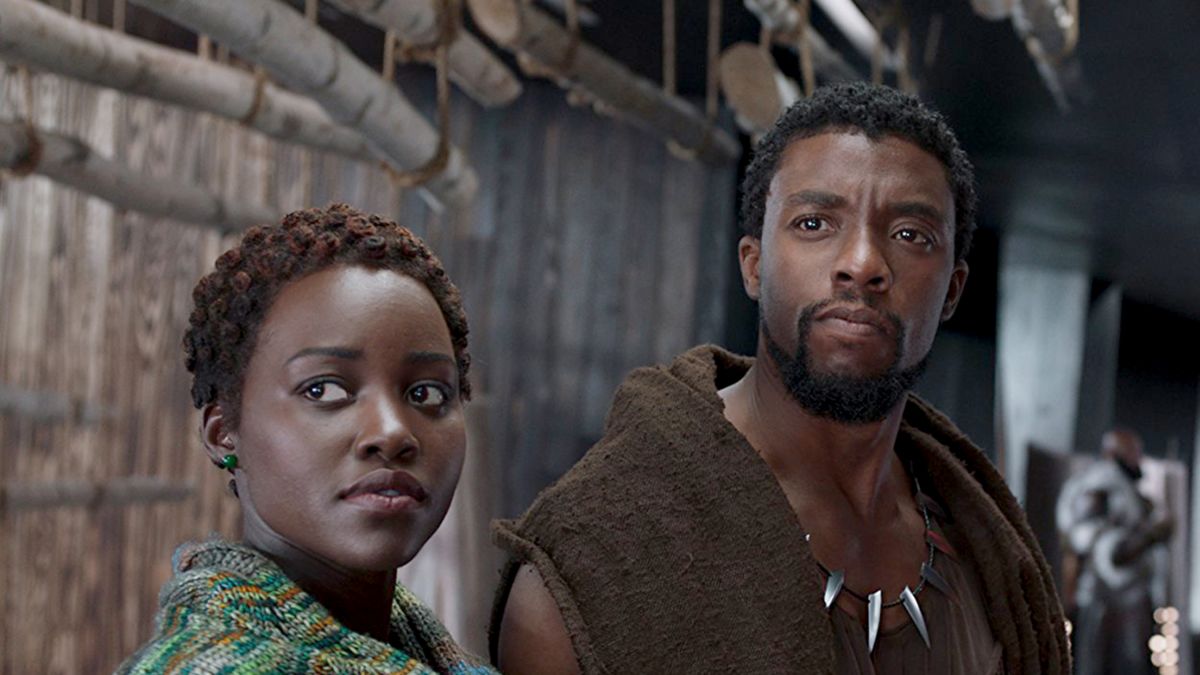
The Marvel Cinematic Universe breaks many of the conventional franchise rules, so you could view “Black Panther” as the start of its own new series, or as a spin-off of “Captain America: Civil War,” and either way you’d be right. But it’s also fair to call it the 18th film in one ongoing series about costumed crimefighters. And it’s very fair to say that it’s probably the best one. The late, incomparable Chadwick Boseman stars as the superhero leader of a technologically advanced African country, and Michael B. Jordan plays a challenger to his throne, one of the most morally complicated characters in the whole MCU. A masterpiece of Afrofuturism, one of the most inspiring blockbusters ever.
‘Avatar: The Way of Water’ (2022)

James Cameron’s first “Avatar” was hailed as a visual effects masterpiece, and even though its derivative colonialist power fantasy was simplistic and regressive, the novelty alone was probably enough to break it into the Best Picture race. (Cameron’s first ultra-budget film lost to Kathryn Bigelow’s “The Hurt Locker,” which cost only $15 million.) The sequel, “Avatar: The Way of Water,” has even more ambitious visual effects, and a much less derivative story. The Na’fi are still besieged by those gosh darned evil humans, so our heroes move to the beach where their daughter turns out to be a chosen one and one of their sons befriends a space whale. And somehow it not only looks rad, but it also kinda works. It lost to the even more imaginative and narratively ambitious original sci-fi film “Everything Everywhere All at Once.”
‘Top Gun: Maverick’ (2022)

The original Air Force propaganda classic “Top Gun” was a massive hit in 1986 and helped solidify Tom Cruise’s box office stardom. But although it was nominated for four Academy Awards and won Best Original song for the romantic “Take My Breath Away,” it wasn’t nominated for Best Picture. (The Academy threw its support behind Charlie Sheen instead, and gave the top award to Oliver Stone’s “Platoon.”) The long, long, long-awaited sequel “Top Gun: Maverick” was another story. In addition to driving audiences to theaters after the global lockdown almost drove theaters to extinction, it was also an incredibly slick production, as visually impressive as any major blockbuster on record. And sure, it’s still shameless propaganda, but a lot of people really like shameless propaganda. Like the “Avatar” sequel, “Maverick” also lost to “Everything Everywhere All at Once.”
‘Dune: Part II’ (2024)

Denis Villeneuve’s new version of Frank Herbert’s best-selling sci-fi novel “Dune” was a huge success, an extra-impressive achievement since the first movie version, directed by David Lynch in 1984, was a notorious critical and box office flop. The new version stripped away Lynch’s dreamy weirdness, which worked in its own spacey way, for a literal approach to the story’s plot. The first “Dune” lost Best Picture to the low-budget feel-good remake “CODA,” but Villeneuve’s even-better (and even spacier) sequel came roaring back into the race three years later, where it lost to the even lower-budgeted dramedy “Anora.”
The post Every Sequel Ever Nominated for Best Picture appeared first on TheWrap.
What's Your Reaction?
 Like
0
Like
0
 Dislike
0
Dislike
0
 Love
0
Love
0
 Funny
0
Funny
0
 Angry
0
Angry
0
 Sad
0
Sad
0
 Wow
0
Wow
0