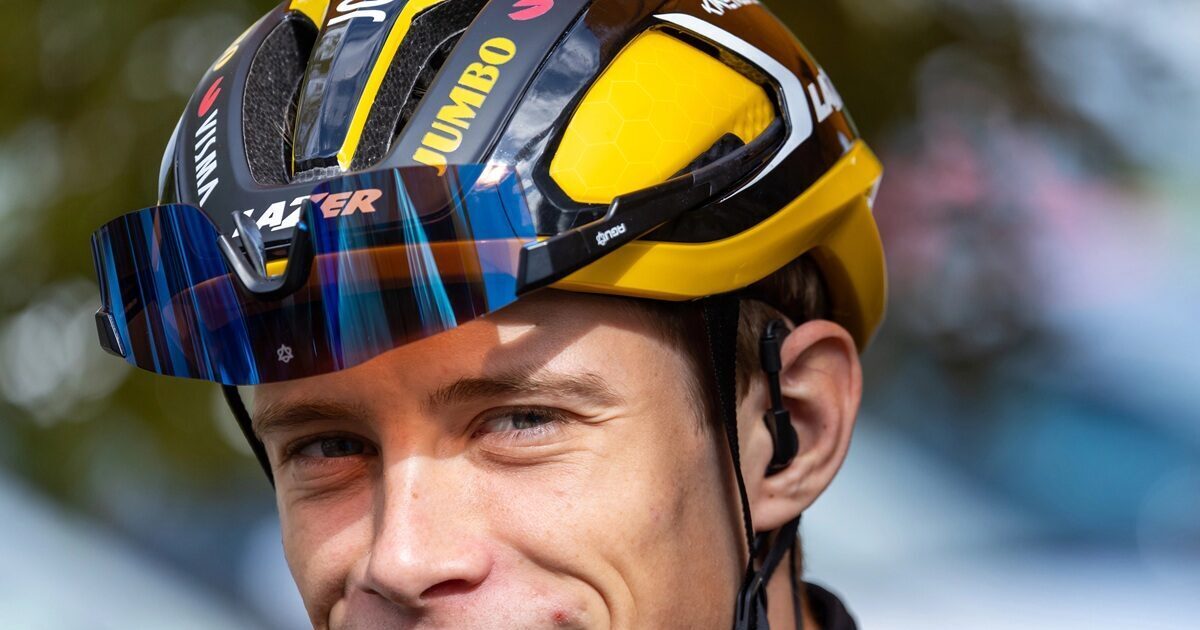
Jonas Vingegaard did not arrive in professional cycling carrying the reputation of a future Tour de France champion.
He came from the flat, windswept roads of northern Denmark, spent part of his early career working in the fishing industry, and progressed through the sport without the attention normally attached to its most gifted young riders.
Yet once Vingegaard reached cycling’s highest level, his development accelerated. A reserve rider became a Grand Tour leader. A talented climber became an accomplished time triallist. By the age of 29, he had won the Tour de France twice, added victories at the Vuelta a España and Giro d’Italia, and joined the small group of riders to have conquered all three Grand Tours.
His rise has also made him an essential figure in the modern history of the Tour. Tadej Pogačar’s range and attacking instincts may have defined the era, but Vingegaard became the rival capable of exposing his weaknesses across three weeks.
The Dane’s career has never depended on spectacle alone. Precision, preparation and sustained climbing strength have carried him to the top.
From Northern Denmark to the Professional Peloton
Vingegaard was born in Hillerslev, Denmark, on 10 December 1996. He began racing with Thy Cykle Ring before progressing through Aalborg Cykle Ring and Odder Cykel Klub.
His early results offered promise rather than certainty. Vingegaard was lightly built and clearly suited to climbing, but Denmark’s terrain provided few opportunities to demonstrate that quality in the conditions he would later master.
Cycling was not yet a secure career. He worked at a fish auction and later at a fish factory while training, combining morning shifts with the long hours required to develop as a rider. He remained at the factory until the summer of 2018, shortly before his move to the WorldTour.
That background has sometimes been reduced to an easy rags-to-riches storyline. In reality, Vingegaard’s emergence was more gradual. He had already joined Danish Continental team ColoQuick in 2016 and was building the physical foundation that would eventually attract one of the strongest teams in professional cycling.
Jumbo-Visma, now Team Visma-Lease a Bike, signed him for the 2019 season. His first WorldTour year brought a breakthrough stage victory at the Tour de Pologne, showing that his climbing ability could translate to a much higher standard of racing.
Vingegaard’s Breakthrough Changed the Tour Hierarchy
Vingegaard made his Grand Tour debut at the 2020 Vuelta a España, working for Primož Roglič as the Slovenian secured his second consecutive overall victory.
His own ambitions became clearer the following season. Vingegaard won a stage at the UAE Tour, performed strongly at the Settimana Internazionale Coppi e Bartali and finished second to Roglič at the Tour of the Basque Country.
Even so, he began the 2021 Tour de France as a support rider rather than Jumbo-Visma’s central contender.
Roglič’s withdrawal after suffering injuries in crashes changed the team’s plans. Vingegaard moved into a leadership role and proved that he belonged among the best general-classification riders in the world.
He became the first rider to distance Pogačar on a Tour climb during the Slovenian’s dominant 2021 campaign, attacking on Mont Ventoux before being caught on the descent. He ultimately finished second in Paris, behind Pogačar and ahead of Richard Carapaz.
It was his first Tour appearance and his first Grand Tour podium. More importantly, it showed that his climbing strength could survive the accumulation of fatigue across three weeks.
How Vingegaard Won the 2022 Tour de France
Vingegaard returned in 2022 as one of Jumbo-Visma’s two general-classification leaders alongside Roglič. The team also had Wout van Aert pursuing stage victories and the green jersey, creating several tactical options.
Their collective strength became decisive on Stage 11.
Jumbo-Visma repeatedly attacked Pogačar on the Col du Télégraphe and Col du Galibier, forcing the defending champion to respond to moves from both Roglič and Vingegaard. The pressure continued towards the Col du Granon.
Vingegaard waited until the final climb before making his decisive move. Pogačar could not respond, and the Dane rode clear to win the stage and take the yellow jersey.
The result did not come from one explosive acceleration alone. Jumbo-Visma had made Pogačar spend energy throughout the stage, isolating him before Vingegaard used his greater endurance on the longest climb.
Vingegaard then defended the lead against repeated attacks. At Hautacam, he turned defence into another stage victory after Pogačar crashed on the descent from the Col de Spandelles. Vingegaard slowed until his rival returned before the pair resumed racing.
He reached Paris 2 minutes and 43 seconds ahead of Pogačar, becoming only the second Danish winner of the Tour after Bjarne Riis in 1996. Vingegaard also won the mountains classification and two stages, one in the Alps and another in the Pyrenees.
For more context on that defining rivalry, World in Sport’s Tadej Pogačar profile examines how the 2022 defeat influenced the Slovenian’s later development.
A Second Tour Victory Proved His Complete Range
Defending the Tour in 2023 required a different kind of performance.
Vingegaard and Pogačar remained close throughout the first two weeks. Neither rider could establish a secure advantage, and Vingegaard carried a lead of only ten seconds into the final week.
The individual time trial from Passy to Combloux changed the race.
Vingegaard produced the strongest time trial of his career, beating Pogačar by 1 minute and 38 seconds over 22.4 kilometres. He rode the technical descents, flatter sections and final climb with remarkable consistency, extending his overall lead to 1 minute and 48 seconds.
One day later, Pogačar cracked on the road to Courchevel after the Col de la Loze. Vingegaard finished the Tour 7 minutes and 29 seconds clear, the largest winning margin since Vincenzo Nibali’s victory in 2014.
The nature of the win mattered. Vingegaard had already established himself as an elite climber, but his time-trial performance demonstrated that he had become a complete Grand Tour rider.
He could gain time in the mountains, defend on shorter explosive finishes and deliver when racing alone against the clock.
Jonas Vingegaard’s Tour de France Record
| Year | Overall result | Defining moment |
|---|---|---|
| 2021 | Second | Emerges as Jumbo-Visma’s leader after Primož Roglič withdraws |
| 2022 | Winner | Takes yellow with victory on the Col du Granon |
| 2023 | Winner | Dominates the Passy-to-Combloux individual time trial |
| 2024 | Second | Returns from serious injury and wins at Le Lioran |
| 2025 | Second | Secures a fifth consecutive Tour podium |
| 2026 | Did not finish | Withdraws after a Stage 15 crash while second overall |
Vingegaard finished on the podium in each of his first five Tour appearances, winning twice and placing second three times. His 2026 withdrawal ended an uninterrupted run in which he and Pogačar had occupied the top two positions at every Tour since 2021.
World in Sport’s Tour de France 2026 results provide the full context around his most recent appearance and Pogačar’s fifth overall victory.
Why Vingegaard Is Such an Effective Climber
Vingegaard’s climbing style is built around economy rather than visible aggression.
He usually remains seated for long periods, keeps his upper body stable and maintains a high, controlled cadence. There is little wasted movement, even when the gradient increases.
His light frame gives him an obvious advantage on prolonged ascents, but weight alone does not explain his results. Vingegaard can sustain his pace at the end of demanding stages, when repeated climbs and hours of racing have reduced the effectiveness of more explosive rivals.
He is particularly strong on long Alpine and Pyrenean climbs where pacing becomes as important as acceleration. Rather than launching constant attacks, Vingegaard often applies pressure through a prolonged increase in speed. Rivals may initially remain on his wheel before losing contact as the effort continues.
His recovery between difficult stages has also been one of his strongest attributes. Grand Tours are rarely decided by one isolated performance. Riders must repeat their efforts after limited rest, changing weather and thousands of kilometres of racing.
Vingegaard’s best victories have come when that accumulated fatigue begins to separate the strongest three-week riders from those capable of matching them for only a few days.
Team strategy remains central. Visma have frequently used domestiques to control breakaways, set a demanding pace and limit attacks before Vingegaard makes his move. The approach worked most dramatically on the Granon in 2022, although it depends on the team having enough riders left to impose its plan.
His time-trial improvement completed the package. Vingegaard does not merely limit losses against the clock. On suitable courses, particularly those containing climbing and technical descending, he can take substantial time from other overall contenders.
The 2024 Crash Tested His Recovery
Vingegaard’s attempt to win a third consecutive Tour changed in April 2024.
He was involved in a high-speed crash during the Tour of the Basque Country. His injuries included a fractured collarbone, broken ribs and damage to a lung, forcing him to spend an extended period in hospital before beginning rehabilitation.
For several weeks, it remained uncertain whether he would reach the Tour de France.
Vingegaard eventually started the race without the preparation he would normally consider necessary. Despite that disrupted build-up, he won Stage 11 at Le Lioran, catching Pogačar after an attack before beating him in a two-rider sprint.
Pogačar was stronger over the full race and won by 6 minutes and 17 seconds, but Vingegaard’s second place carried significance beyond the result. He had returned to Grand Tour competition less than three months after a crash that could have ended his season.
Another second-place finish followed at the 2025 Tour, where Pogačar beat him by 4 minutes and 24 seconds. Vingegaard had again confirmed his position above the wider group of general-classification contenders, even though he could not overturn his rival’s advantage.
The modern Tour battle is explored further in World in Sport’s 2026 general-classification contenders guide.
Completing the Set of Grand Tour Victories
Vingegaard broadened his career beyond the Tour by winning the 2025 Vuelta a España.
He claimed the red jersey ahead of João Almeida and Tom Pidcock, becoming the first Danish winner of the Spanish Grand Tour. He finished 1 minute and 16 seconds ahead of Almeida after winning three stages during the race.
The victory removed any suggestion that his success depended entirely on July or on one Tour-focused preparation programme.
His 2026 season strengthened that point.
Vingegaard won Paris–Nice and the Volta a Catalunya before making his Giro d’Italia debut. In Italy, he won five stages and the overall classification, becoming the first Dane to take the maglia rosa to Rome.
The result also made him the eighth male rider to win the Giro d’Italia, Tour de France and Vuelta a España during his career. The official Giro d’Italia account of Vingegaard’s victory placed him alongside the limited group to have completed cycling’s Grand Tour set.
| Grand Tour | Overall victories | Individual stage wins |
|---|---|---|
| Tour de France | 2022 and 2023 | Four |
| Vuelta a España | 2025 | Five |
| Giro d’Italia | 2026 | Five |
The 2026 Tour Ended with Another Injury
Vingegaard arrived at the 2026 Tour after an unusually demanding season that had already included victory at the Giro.
Visma–Lease a Bike claimed victory in the opening team time trial in Barcelona, sending Vingegaard into the yellow jersey. He and Pogačar remained tied on time through the opening weekend, before the Slovenian established a decisive advantage in the mountains.
Vingegaard remained second overall until Stage 15, when he crashed near the end of the route to the Plateau de Solaison. He left the race with a fractured collarbone and later underwent successful surgery.
The withdrawal did not erase the significance of his spring and Giro campaign, but it added another serious interruption to a career increasingly shaped by recovery as well as victory.
At 29, Vingegaard remains an active rider rather than a figure whose legacy can be fully assessed.
His response to another injury will influence the next stage of that career.
A Rivalry Built on Contrasting Strengths
Vingegaard and Pogačar have given modern Grand Tour racing a rivalry based on genuine tactical and stylistic differences.
Pogačar can win sprints, cobbled Classics, hilly one-day races, time trials and mountain stages. His instinct is often to attack early and turn a controlled race into an unpredictable contest.
Vingegaard’s range is narrower but highly specialised. He builds his season around stage racing, long climbs and the repeated demands of Grand Tours. His best performances often come when a race has become an endurance contest rather than a sequence of isolated attacks.
Neither method is automatically superior. Routes, preparation, health and team strength can shift the balance.
Pogačar has enjoyed the stronger results since 2024, but Vingegaard remains the only rider to have beaten him twice at the Tour. Without those victories, the recent history of the race would have been considerably less competitive.
Readers can follow more rider features, race analysis and results through World in Sport’s cycling coverage and wider sports profiles collection.
How Jonas Vingegaard Should Be Remembered
Vingegaard’s story is not simply that of a former factory worker who became a Tour de France champion.
Its real significance lies in the scale of his improvement.
He entered the WorldTour without the junior record of a Pogačar or Remco Evenepoel. Within three seasons, he had finished second at the Tour. One year later, he won it. He then defended the title, developed into an elite time triallist and eventually won every Grand Tour.
His career has shown how specialisation can still succeed in an era increasingly dominated by versatile riders. Vingegaard has not attempted to become a Classics champion or a prolific sprinter. He has concentrated on the qualities required to win the longest and most physically demanding stage races.
That focus has produced two yellow jerseys, victories in Spain and Italy, and one of the defining rivalries of his generation.
There may yet be further Tour challenges and more decisive mountain battles. Whatever follows, Vingegaard has already secured an important place in cycling history: not as the loudest or most flamboyant champion, but as one of the finest Grand Tour climbers of the modern era.