




‘Ripple’ Creator Michele Giannusa Reveals Story Details, Jump to Netflix and Future Season Prospects


Picture Credits: Lionsgate Television
Created by Michele Giannusa (The Dead Girls Detective Agency), Ripple is a sentimental drama set in New York City, where a group of strangers are brought together by small, seemingly insignificant and innocuous decisions.
Produced by Lionsgate TV, Ripple premiered on Netflix on December 3. The series gained instant traction on the streamer, with viewers taking to social media to express their feelings about its sentimental, often heartbreaking storytelling.
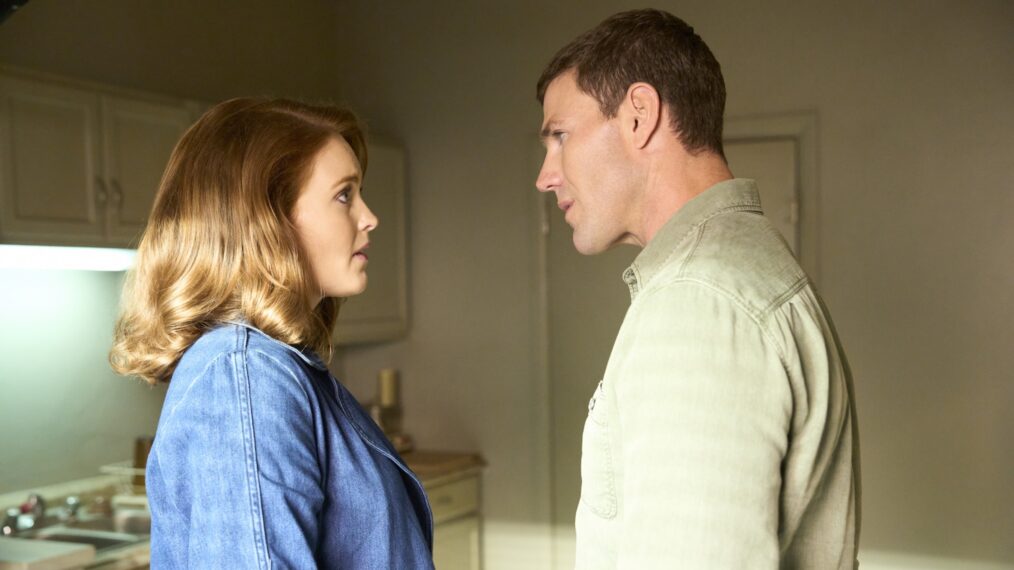
Starring Frankie Faison, Julia Chan, Ian Harding, and Sydney Agudong, Ripple takes place in New York City, exploring how seemingly small decisions can bring people together in unexpected and wonderful ways. The series follows four strangers — Walter, Kris, Nate, and Aria — who are each struggling with their own lives, but are brought together by small, chance moments that cause ripple effects, bringing them together.
We recently had the opportunity to catch up with Ripple creator and executive producer Michele Giannusa. In our interview, she explained how the show came to be, dived into her creative process, and weighed in on the potential of further seasons.
Check out our full interview with Michele Giannusa below:
What’s On Netflix: First of all, congratulations on the show! Ripple has been on Netflix for a few days now. The reaction online has been super positive, with fans calling it powerful, sentimental, and emotional. How do you feel about the reception to the series?
Michele Giannusa: I have to say that I have absolutely nothing to compare this to. From day one, the messages that have been coming in, I am overwhelmed in the absolute best way. I think in my heart, this has always been a very personal show to me, and so the fact that the reception has been so warm, I’m overjoyed that people are connecting to it.
WoN: Your premise suggests that tiny, apparently insignificant decisions can alter lives dramatically. What made you want to explore that sort of ripple effect?
I moved to Los Angeles in 2014. I had come out of a divorce and wanted to give myself a shot in the TV writing world. I didn’t know anyone, and I had no idea how I was going to do it — but I was determined to try and do that. I got into the NBC writers programme in 2015, and in my head I was like, “This is definitely it, I’m going to get work now, and this is all going to happen. It was a great programme, but it didn’t happen.
After that programme, I was taking meetings. You’d meet some people, and one day, I was in a really tough place because I didn’t see the outcome I thought I would, and I was driving home from a meeting in traffic. I saw this — it sounds strange, but this is what happened — I saw a palm tree on the side of the highway. For a split second, I did not know where I was, I was like, “Wait, am I not in New York right now,” and so I had one of those moments where I don’t know where I am, and so the whole way I was driving home, I just kept thinking to myself, I don’t even understand how this happened. I was just married, living on the East Coast, and I had this whole life, how did I get here? By the time I got home, I had this idea in my head about all these things that had happened, but then it’s almost like I had met these four people, and I started jotting this thing down, and it all came out of that. I realised that part of the journey, even though it’s not solely this, was receiving this accidental text message that wasn’t meant for me. That kind of changed the trajectory of my life, and so I think that that was the thing that sort of led me here. Had that not happened, this would not be happening at all.

WoN: Early on the show, you portray a blue stone falling from a high-rise. How did you arrive at that symbol as the catalyst for the ‘ripple’ in the story?
It had always been a stone. From the very start, the stone was always going to be the thing that brought them together. It changed over time, and so in development, it came off the roof. There’s something very simplistic about it, to be honest, and I think that’s what I wanted to focus on. It wasn’t going to be some grandiose thing; it was actually just going to be this thing that fell. That’s really what I love talking about the most; how it’s never really those grandiose things, is it? It’s always really that small thing.
WoN: You’ve got your four main characters, Walter (who’s my personal favourite), Kris, Nate, and Aria. They come from different worlds: loss, illness, career, artistic struggle. How did you build these characters and decide on these different arcs for them?
Each of them is personal, I would say. For the cancer journey for Nate, I had a very close friend of mine who went through a cancer journey in her 30s, and I think that’s its own version of grief in its own way. And so I wanted to be able to shed a little light on that, even though it wasn’t a personal experience for me. I wanted to be able to shine a little light on that part of a grief journey that, I think, isn’t often represented as grief. And the same thing for divorce, to be honest—that one I knew well.
With Walter, it’s interesting, too, because again, generationally, I know we’re worlds apart, but I had lost someone very close to me when I was 20. That changed my whole life, really, and it was quite tragic. I also lost my dad 16 years ago today. And so it’s a really interesting thing, again, to sort of be able to talk about when you are planning your life in this way, and then that person is just gone, and what that means. I was in a different stage of planning my life when I was quite young with this person and it happened to me. But when we lost my dad, I watched my mom go through that. How she was planning these retirement years with my dad, and then that didn’t happen.
With Kris, I will fully admit that I’ve gotten fired many times in my life. I think I didn’t know early on in my life that I was not a 9-to-5 person, right? So when I didn’t really realize that that world was not for me, I understood what firing meant. I wanted to be able to talk about that.
With Aria, it was that sort of dark place of anxiety. As a creative person, I think that is something that lives in you. With Kris and Aria in particular, it’s interesting, because I think Aria encompasses a lot of me in my 20s, and Kris encompasses a lot of me in my 40s. It’s a nice thing to be able to kind of show those different parts of yourself, kind of before you find your voice and your successes, and what that looks like—that anxiety and sometimes depression—and what it looks like when you’ve already achieved that in your 40s. And then if the rug gets pulled out from under you, what do you do? As it happened to me many times with this particular show until we’ve gotten here. So I don’t know, I just felt like it was really important to talk about all these different versions of grief, because while they’re all in different sort of calibers, they’re all still really important.”

WoN: You’ve got these four core characters, but I always think of the fifth character as being the setting. New York City. You are from New York City. You’ve described the series as a ‘love letter’ to the city. How do you draw on your personal memories? And were there any specific parts or aspects of the city that you wanted to explore?
I have a very, a very strong protection for my city. I grew up in New York in the 80s, and it was tough. And it’s tough right now, like a lot of cities — it’s tough in the United States right now. One thing that I will not tolerate is anyone talking about the city in a way that doesn’t express how resilient it is. My people are incredible.
In my core, I know that and I believe that. I was in Manhattan on September 11. I know what we are capable of. I know those people well, I know our city well. And I just feel so strongly about that in my whole being. Being born and raised in a place like that, where, yes, there’s a lot of noise, it’s very congested. I get all of the things that come with living in a city. I just feel it’s the best city in the world. It prepared me; I have travelled quite a bit in my life, but I can go anywhere because I was raised there. If you can make it there, you can make it anywhere because it’s tough, but it’s equally strong and wonderful. There’s a lot of love there. And I know what’s underneath all of it. There’s no way the show was not going to be set there. It had to be.
WoN: One thing I did want to touch on is that Ripple moved from Hallmark+ to Netflix. How did that influence your creative vision for the series?
I actually first sold the show in 2018 to Netflix. So that is how this journey started. I had an amazing executive there whom I had met with for something else. She had read Ripple as a sample for a staffing opportunity. And she said, “Well, what are you doing with this?” Her name is Lisa Hamilton Daly. And she, if you want to talk about a champion, she was it. We sold it to Netflix in 2018. It was great. We were excited. We were developing it there. And then COVID happened… and the industry shut down. Netflix ended up doing a reshuffle and ended up letting go of a lot of amazing people, including Lisa. And so we sadly were pulled from there.
We went back out. Lisa landed at Hallmark. She called me up. She said, “Where is Ripple? And I said, “Lisa, I don’t know if this is a Hallmark show,” And she said, “Let’s do this.”
My original pilot is not what the show is now. It was in a very different place when we first started there. That said, I am so unbelievably proud of our show. And yes, it did change creatively. It had to because what Hallmark was planning on doing was having these edgier shows on their platform. And then in this past January, they opted to go back to what they call their legendary brand. And so we moved on from Hallmark and full circle came back to Netflix.

Picture: Lionsgate Television
WoN: You dive into such deep topics on Ripple. It’s devastating, heartbreaking at times. Overall, what message would you like viewers to take away from watching the show?
I think that, in the end, the found family theme underneath it all is so important to me.
I think when we are in the throes of grief, it is very easy sometimes to go into a dark place and feel like we’re alone. I know I had to push myself at a time in my life when I just didn’t know how I was going to come out of that place. It felt very dark. It felt very sad. There was a lot of grief, but I did. I pushed myself to join a community that surrounded me, did not know me, and were complete strangers. They embraced me, supported me, and helped me through probably the darkest time of my life. And I don’t know what is more important than someone having your back.
Even in this process now, as I’m kind of going through this every day, and this amazing feedback that I’m getting, there are a lot of feelings involved in this. And I’m lucky enough to have a sister who is really pretty much my best friend. If I did not have her, I don’t know how I would feel that ground under my feet. You have to have those people in your life. And so really, really, that is what I hope that everyone takes away, that if you are in a point in your life where you feel like you are alone, I promise you, there are people that you don’t even know that will support you. You just have to kind of, you do have to step out and try and find them. It might not be that easy, but you can.
WoN: The finale leaves open the possibility for future stories. Do you have any ideas in place for another season?
When the show started in development, I had five seasons in my pocket. I’ve always had five seasons in my pocket. I won’t tell you, but I know exactly what the very last shot of the last episode looks like. I really, really hope we can keep telling these stories. There are so many more stories. I mean, you should just see my notes. So many more stories that I can’t wait to tell. And also, just the fact that with our writer’s room alone, I mean, they come in with their own stories. And so we’re all excited to keep telling this. So the answer is yes, we have many more stories to tell, and I hope we get to keep telling them.
This interview has been edited for clarity and brevity.
We thank Michele Giannusa for her time. Ripple season 1 is now streaming on Netflix.
What did you think of Ripple? Tell us in the comments down below.
What's Your Reaction?
 Like
0
Like
0
 Dislike
0
Dislike
0
 Love
0
Love
0
 Funny
0
Funny
0
 Angry
0
Angry
0
 Sad
0
Sad
0
 Wow
0
Wow
0