






Netflix Pulls Off The Wildest Takeover In Hollywood History
Netflix has officially detonated the biggest entertainment bombshell in decades, confirming an $82.7 billion acquisition of Warner Bros.
The unprecedented megadeal, quietly engineered under the internal codename “Project Noble,” instantly changes the future of streaming, theatrical releases, and studio power.
As Hollywood scrambles to process the fallout, Netflix is already signaling its boldest transformation yet.
Netflix’s Game-Changing Bet On Warner Bros.
Today, Netflix announced our acquisition of Warner Bros. Together, we’ll define the next century of storytelling, creating an extraordinary entertainment offering for audiences everywhere. https://t.co/rXPFMNIs1A pic.twitter.com/0pdsMUEob8
— Netflix (@netflix) December 5, 2025
Netflix stunned the industry with its announcement early Friday, revealing it secured $59 billion in financing to swallow Warner Bros., one of the oldest and most prestigious studios in the world.
The streamer framed the takeover as a chance to expand its creative universe, optimize its plans, and deliver more value for viewers and talent alike, while also unlocking $2–$3 billion in yearly cost savings.
Netflix promised users it would keep Warner Bros. operating as usual, pledging to maintain theatrical releases even as specifics remain under wraps.
The streamer told creatives that “by uniting Netflix’s member experience and global reach with Warner Bros.’ renowned franchises and extensive library, the Company will create greater value for talent.”
Shareholders of Warner Bros. Discovery will receive a lucrative payout: $23.25 in cash and $4.50 in Netflix stock per share.
Meanwhile, WBD’s traditional linear networks, including CNN, TNT, HGTV, and Discovery+, are still set to spin off into a separate entity next year.
Co-CEO Ted Sarandos acknowledged how surprising the move may seem. He said per The Hollywood Reporter, “I know some of you are surprised that we’re making this acquisition, and I certainly understand why. Over the years, we have been known to be builders, not buyers.”
Sarandos emphasized that the deal accelerates Netflix’s long mission to “entertain the world and bring people together through great stories.”
Why Netflix Thinks Now Is The Moment To Strike
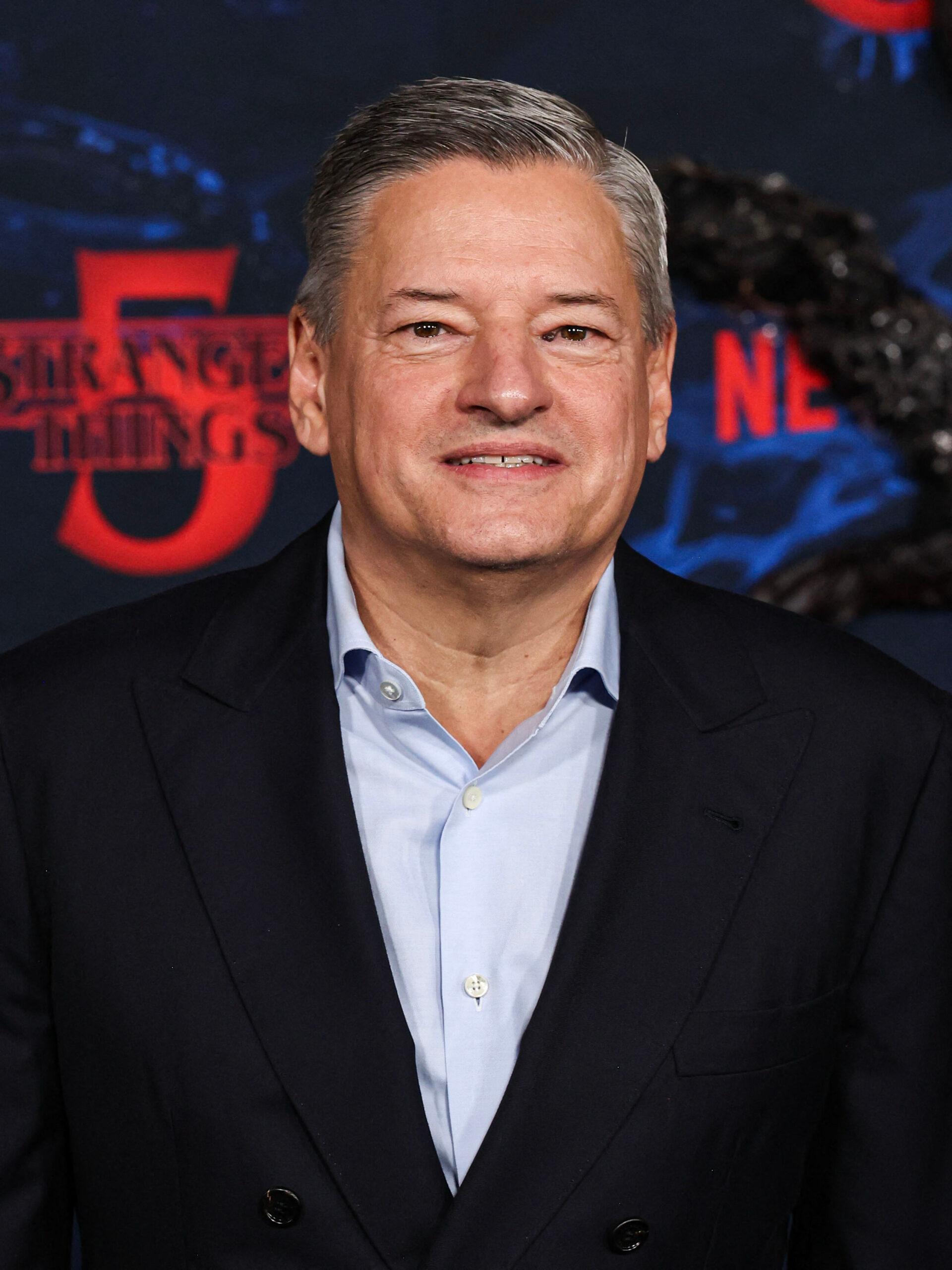
Sarandos framed the acquisition as the natural evolution of the company’s history from DVD-by-mail disruptor to global streaming behemoth.
“We built a great business, and to do that, we’ve had to be bold and continue to evolve,” he said.
He reminded investors that Netflix reinvented itself repeatedly, first with streaming, then originals, then global expansion, and cannot afford to stand still in a world overflowing with content choices.
His counterpart, Greg Peters, reinforced that Netflix sees the Warner Bros. takeover as a once-in-a-generation expansion.
“This acquisition will improve our offering and accelerate our business for decades to come,” he said, praising Warner Bros.’ century-long legacy and its “phenomenal creative executives and production capabilities.”
Warner Bros. Discovery CEO David Zaslav echoed that enthusiasm. “Today’s announcement combines two of the greatest storytelling companies in the world,” he said, and ensures audiences will enjoy Warner Bros.’ most iconic entertainment “for generations to come.”
With Netflix’s deep pockets, global distribution engine, and unmatched subscriber base, analysts say it has emerged as the definitive victor of the streaming wars.
The takeover also allows Warner Bros. Discovery to move forward with its long-planned separation of its networks division.
Netflix Gains Access To Some Of The Most Valuable IP On Earth
Wall Street experts have already broken down why Netflix’s offer outpaced all contenders.
Wolfe Research noted that Netflix’s engagement spikes when content spending increases, which is critical during a time when mid-size studios are struggling to keep up financially.
Bank of America’s Jessica Reif Ehrlich wrote that the 2025 media landscape no longer allows legacy studios to compete with streaming giants and tech conglomerates.
She said a Netflix acquisition of Warner Bros. could “kill three birds with one stone,” weakening multiple competitors at once by locking away Warner’s library, while leaving Paramount/Skydance and NBCUniversal scrambling for survival.
Morgan Stanley analyst Benjamin Swinburne highlighted the treasure trove of intellectual property Netflix gains access to.
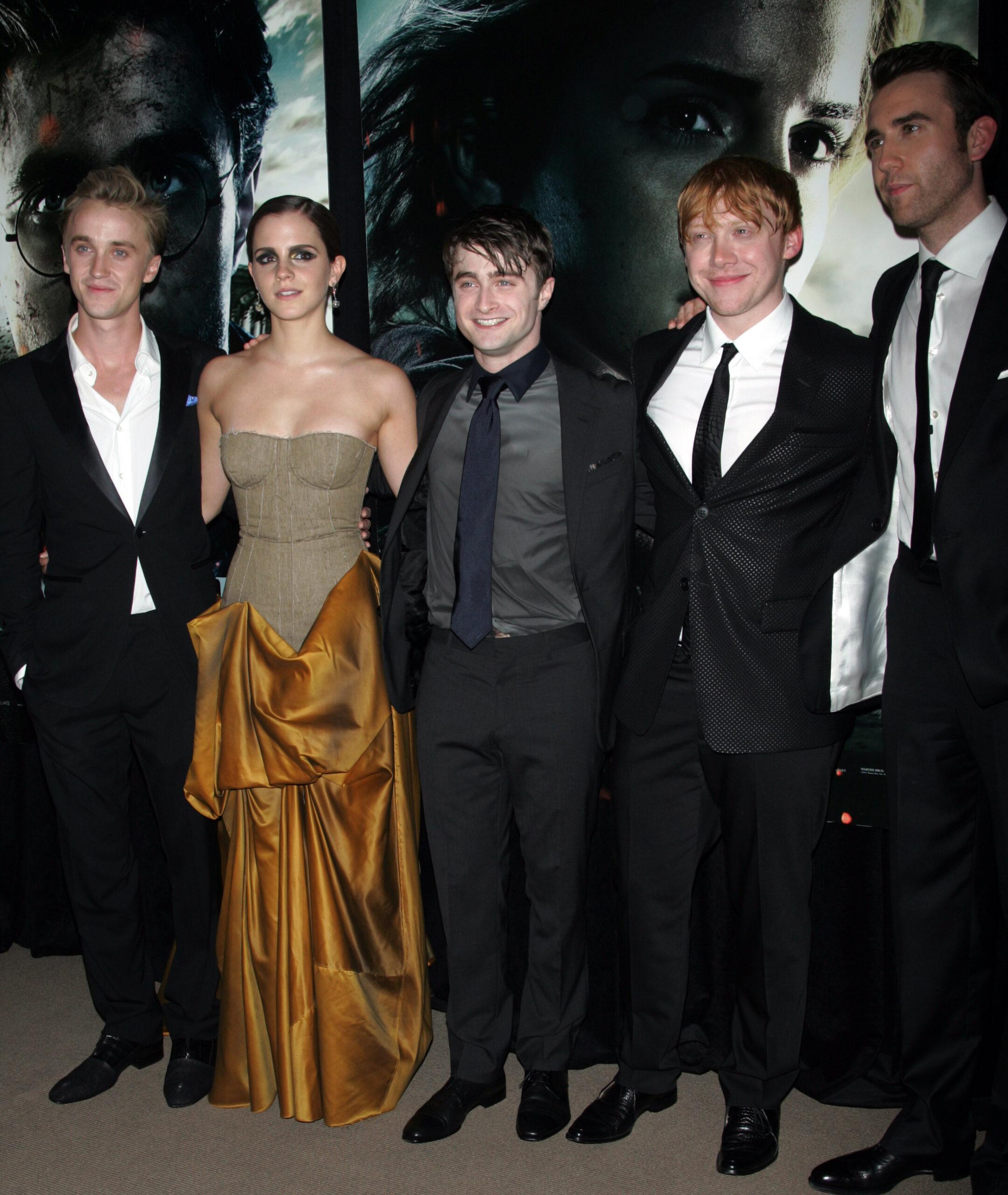
For the streamer, franchises like DC Comics, "Harry Potter," and "The Lord of the Rings" represent decades of future storytelling power.
HBO and HBO Max add even more prestige, with Swinburne noting HBO’s original programming remains synonymous with awards and cultural relevance.
He also pointed out that only a small percentage of HBO’s global subscribers come through traditional cable bundles, meaning Netflix won’t inherit the worst of linear TV’s decline.
Massive Regulatory Battles Loom After Netflix’s Big Swing
"a Warner Bros Discovery spokesperson confirmed the recently-restructured video game division, which includes studios such as Mortal Kombat creator NetherRealm, Batman: Arkham developer Rocksteady, and LEGO custodian TT Games, will be joining Netflix." pic.twitter.com/mRkgirghR4
— Crypto Kavi (@CryptoKaviYT) December 5, 2025
Despite the enthusiasm in Silicon Valley and Wall Street, Netflix’s leap into studio ownership is triggering major alarms across Hollywood.
Theaters are worried, filmmakers are uneasy, and regulators are already preparing to scrutinize the deal.
Cinema United, which represents American theater chains, issued a blunt warning that “the proposed acquisition of Warner Bros. by Netflix poses an unprecedented threat to the global exhibition business.”
Its CEO, Michael O’Leary, said the transaction could harm theaters “from the biggest circuits to one-screen independents,” arguing that Netflix’s core business model does not support theatrical releases, something the streamer insists it will uphold.
Cinema United urged regulators to “look closely” at the potential harm to consumers and the entire entertainment ecosystem.
The Directors Guild also raised alarms, saying the deal presents “significant concerns” for artists and the creative community.
Even before the news broke, Bernstein analyst Laurent Yoon predicted this scenario, writing that WBD faced “little downside” in joining Netflix.
He argued that if the deal fell apart, WBD would still walk away with a hefty breakup fee: $5.8 billion, enough to fund more than 20 superhero-sized blockbusters.
Hollywood Braces For A New Era As Netflix Rewrites The Rules
My reaction on this deal pic.twitter.com/7rYgxMPpgF
— The Random Guy (@RandomTheGuy_) December 5, 2025
The takeover marks a seismic shift in power, folding one of Hollywood’s oldest studios into a tech-born entertainment empire.
Netflix now controls a vast vault of blockbuster IP, a massive production machine, top-tier creators, and an international distribution pipeline no traditional studio can match.
However, the risks are equally enormous. Regulators could block the deal. Rival studios may collapse or consolidate in response. Theatrical windows could shrink further. And Hollywood’s creative labor unions are already eyeing Netflix warily.
Still, for Netflix, this is the moment it has been building toward for decades. After transforming how audiences consume TV and film, the streaming titan is now poised to reshape the entire industry from the inside out.
Whether this becomes a historic triumph or a cautionary tale, one thing is certain: Hollywood will never look the same again.
What's Your Reaction?
 Like
0
Like
0
 Dislike
0
Dislike
0
 Love
0
Love
0
 Funny
0
Funny
0
 Angry
0
Angry
0
 Sad
0
Sad
0
 Wow
0
Wow
0